Cupcake with Cherry Mini Embroidery: A Designer’s Review
As a designer who has spent countless hours digitizing and testing machine embroidery designs, I have learned that size is not just a measurement; it is a constraint that defines quality. When I first loaded the Cupcake with Cherry Mini Embroidery file into my software, I was looking for more than just cuteness. I was looking for structural integrity. In the world of small-scale Embroidery, details can easily turn into a tangled mess if the digitizer does not account for stitch density and fabric pull. This particular design, categorized under Dessert themes, promises a sweet aesthetic, but does it hold up under the needle? After running several test stitches on various materials, I am ready to share my practical assessment for fellow crafters and business owners.
First Impressions and Visual Personality
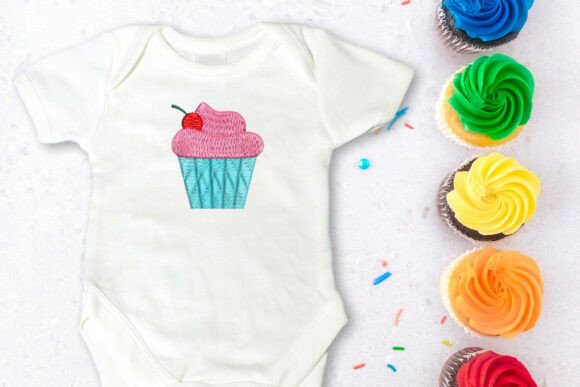
The immediate mood this design creates is one of whimsical nostalgia. The silhouette is clean, featuring a classic cupcake base topped with a swirl of frosting and a single cherry. For those who love to bake or simply appreciate kitchen-themed decor, this visual personality is instantly recognizable. However, from a technical standpoint, the "mini" designation is critical. Small designs require precise digitizing to ensure that the satin stitches on the cherry do not become too dense, which can cause puckering, while the fill stitches in the frosting maintain enough coverage to look solid without becoming stiff.
What stands out here is the balance between simplicity and charm. It does not rely on complex shading or intricate lettering, which makes it highly versatile. This simplicity is a strength for machine embroidery design users who want a quick, reliable result. The layout is centered and balanced, meaning it will sit well on curved surfaces like caps or flat planes like tote bags without looking awkwardly off-center due to fabric distortion.
Real-World Application: The Custom Apron Scenario
To truly evaluate an embroidery file, you must imagine it in a real product context. I recently used this design for a custom order involving a set of linen aprons for a local bakery owner. The client wanted something subtle yet thematic, avoiding the cliché of large, bulky logos. The Cupcake with Cherry Mini Embroidery was placed on the upper left chest area. Because the design is compact, it did not overwhelm the texture of the linen. Instead, it acted as a sophisticated badge of identity for the brand.
This scenario highlights why this design is ideal for small shop product lines. It works exceptionally well on items where space is limited but impact is necessary. Consider using it for:
- Sweatshirt embroidery: Placed on the cuff or near the hem for a subtle detail.
- Tote bag design: Repeated in a pattern or used as a singular focal point on canvas.
- Baby embroidery: Perfect for bibs or onesies where large, heavy stitch areas might irritate sensitive skin.
- Embroidered patch: Created on felt or twill for easy application to jackets or hats.
The versatility extends to holiday embroidery projects as well. With a simple change of thread colors—perhaps swapping the cherry red for pastel pink or mint green—it transitions seamlessly from a birthday gift to a spring-themed decoration. This adaptability is crucial for Etsy seller success, allowing you to maximize the utility of a single digital embroidery file across multiple seasonal collections.
Technical Performance and Fabric Considerations
While the design is charming, its performance depends heavily on your material choices. When working with mini designs, stitch density becomes the primary variable. If you are stitching on thin or stretchy fabric, such as jersey knits for custom apparel, you must use an appropriate stabilizer. I recommend a cut-away stabilizer for garments that will be washed frequently, as it provides ongoing support to the small stitch columns.
Be cautious with textured fabrics. On heavy terrycloth or thick wool, the fine details of the frosting swirl might get lost. In these cases, consider using an applique design technique if the file supports it, or simply increase the scale slightly if your hoop allows. Conversely, on smooth cotton or poly-blends, the satin stitch work on the cherry should pop with high clarity. Always test your thread colors for contrast. A dark cherry on a navy blue shirt may vanish, so adjust your palette to ensure the design remains visible and engaging.
Another critical factor is the hoop size. Since this is a mini design, it fits comfortably in smaller hoops, which is advantageous for hard-to-reach areas like collar tips or sock cuffs. However, ensure your machine’s minimum stitch length capabilities align with the design’s resolution. If your machine struggles with very short stitches, the edges of the cupcake liner may appear jagged rather than smooth.
Enhancing Brand Value and Customer Trust
For craft business owners, the quality of your finished product directly influences customer trust. A clean, well-digitized design like this signals professionalism. It shows that you care about the details, from the tension of the threads to the choice of fabric. When customers receive a personalized gift featuring crisp, non-puckered embroidery, they are more likely to leave positive reviews and return for future purchases.
This design also aids in brand consistency. If your shop focuses on handmade kitchenware or sweet-themed accessories, the Cupcake with Cherry Mini Embroidery becomes a recognizable signature element. You can use it across various design assets, from physical products to printable mockup previews on your website. Consistent visual branding helps buyers remember your shop amidst a crowded marketplace.
Practical Notes for Designers and Makers
Before committing to a full production run, follow these practical steps to ensure success:
- Test on scrap fabric: Always run a test stitch on the exact material you plan to use. Check for puckering or thread breaks.
- Inspect small details: Zoom in on your software to verify that the cherry stem and frosting peaks are properly connected and do not have unnecessary jump stitches.
- Check licensing: Confirm whether the digital embroidery file allows for commercial use. If you are selling finished product items, ensure you have the right to do so.
- Mockup in black and white: This helps you see the structure of the design without the distraction of color, ensuring the shape holds up visually.
- Consider washability: If creating items like potholders or aprons, ensure the threads used are colorfast and can withstand high temperatures.
In conclusion, the Cupcake with Cherry Mini Embroidery is a solid addition to any designer’s library. It balances aesthetic appeal with technical feasibility, making it suitable for a wide range of embroidery project types. Whether you are creating a handmade product for a friend or stocking your online store with unique commercial embroidery items, this design offers the reliability and charm needed to succeed. Just remember to respect the constraints of small-scale stitching, choose your materials wisely, and let the simplicity of the design shine.