Review: Colorful Crayons in a Box Embroidery Design
As someone who has spent countless hours staring at digitized files on a screen and even more hours watching needles pierce fabric, I have developed a keen eye for what works in the real world. We often see designs that look perfect in a thumbnail but fall apart under the tension of actual stitching. Today, I am taking a close, practical look at the Colorful Crayons in a Box Embroidery Design. This is not just about whether it looks cute; it is about whether it holds up as a viable asset for your craft business, client projects, or personal handmade products.
First Impressions and Visual Mood
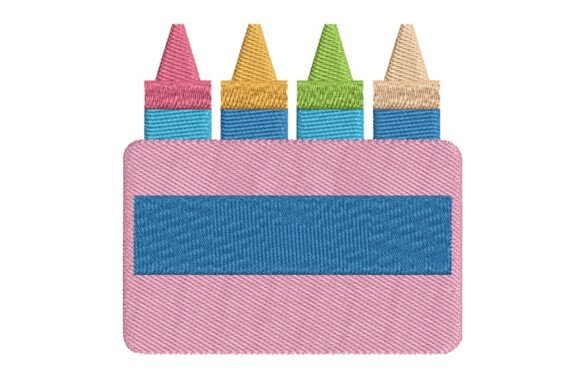
The immediate appeal of this design lies in its nostalgic charm. It captures the essence of Back To School excitement without being overly literal or cluttered. The composition features four vibrant crayons nestled in a light pink box, anchored by a prominent blue band across the front. From a designer’s perspective, the color palette is strategic. The contrast between the warm pinks and the cool blues creates a visual pop that draws the eye, while the varied colors of the crayons themselves add depth without causing chaos.
The layout is compact and balanced, which is crucial for smaller embroidery projects. It does not feel stretched or cramped. The visual personality is cheerful yet clean, making it suitable for a wide demographic. It is not strictly for children; the stylized simplicity allows it to work on adult accessories, such as tote bags or aprons, where a touch of whimsy is welcome. When evaluating any embroidery file, I always ask if the shape reads clearly from a distance. In this case, the silhouette of the box and the angled crayons are distinct enough to be recognizable even when stitched out at a smaller scale.
Real-World Application and Project Fit
To truly test a design, you must imagine it on a finished product. I recently considered this design for a custom order involving canvas tote bags. The Colorful Crayons in a Box Embroidery Design performed exceptionally well here. The sturdy nature of canvas supports the stitch density required for the fill areas in the crayon bodies and the box. For an Etsy seller or small shop owner, this type of design is a goldmine because it bridges the gap between seasonal relevance and year-round appeal. While it fits perfectly into a Back To School collection, it also works for teacher appreciation gifts, birthday presents, or creative workshop merchandise.
Beyond totes, consider sweatshirt embroidery. Placing this motif on the left chest of a heather grey crewneck creates a sophisticated, boutique look. The light pink box provides a soft background that contrasts nicely with darker garment colors, while the blue band offers a professional accent. For baby embroidery, such as onesies or bibs, the design’s rounded edges and lack of sharp, intricate details make it durable against washing and wear. However, when moving to curved surfaces like caps, caution is advised. The rectangular nature of the box may distort slightly on a highly curved crown, so careful hooping and stabilizer selection are non-negotiable.
Technical Performance and Stitching Clarity
When we talk about a machine embroidery design, we are really talking about how the thread interacts with the fabric. This design appears to utilize a mix of satin stitch for the outlines and text areas, and fill stitch for the larger colored sections of the crayons and box. This combination is standard for achieving a polished look, but it requires attention to detail. The satin stitch on the blue band needs to be tight enough to prevent gaps but not so dense that it causes puckering, especially on thinner fabrics.
One critical aspect to evaluate is the stitch density. If the fill areas are too dense, the fabric may pull or warp. If they are too sparse, the backing material might show through. Based on the visual complexity, this design seems to strike a reasonable balance, but I always recommend running a test stitch on scrap fabric identical to your final project material. This is particularly important if you are using textured fabrics like terry cloth or waffle weave. The small details of the crayon tips need to remain sharp; if the stitch count is too high for the area, those points can become blobby and lose their definition.
Navigating Fabric and Hoop Constraints
Not every fabric is created equal, and neither is every hoop size. For this specific design, the dimensions suggest it fits comfortably in standard 4x4 or 5x7 hoops, but you must verify the exact measurements in your digital embroidery file before purchasing. Using it on dark fabric requires careful consideration of thread colors. The light pink box may not stand out against black or navy unless you use a bright white or pastel underlay, or choose a different box color variant if available. Always check thread color contrast in your software before hitting start.
Stretchy fabrics pose another challenge. If you are applying this to a t-shirt or baby knit, a cut-away stabilizer is essential to maintain the integrity of the design after multiple washes. Without proper support, the satin stitch borders can tunnel or break. Additionally, if you plan to use this as an embroidered patch, ensure that the edges are finished cleanly. A running stitch border can help secure the edges if you are cutting the patch out, preventing fraying over time.
Commercial Viability and Brand Consistency
For commercial embroidery and digital product sellers, the value of a design lies in its versatility and professionalism. The Colorful Crayons in a Box Embroidery Design offers a high perceived value because it looks custom rather than generic. It enhances brand consistency for shops that focus on educational, creative, or family-oriented themes. When customers see clean lines and vibrant, well-executed colors, their trust in your craftsmanship increases. This translates directly to buyer engagement and repeat business.
However, before listing this as a finished product or including it in a bundle of design assets, you must confirm the licensing terms. Ensure that the license allows for commercial use if you are selling physical items. Also, consider creating printable mockups to showcase the design on various products. This helps potential buyers visualize the end result, whether it is a holiday embroidery piece for a grandchild or a personalized gift for a favorite teacher.
Final Designer Notes
Before committing to a large production run, take these practical steps. First, inspect the small details. Zoom in on the digitized file to check for unnecessary jump stitches or overlapping paths that could cause thread breaks. Second, test the design in black and white mockups to ensure the contrast holds up without color reliance. Third, compare how it looks on both light and dark fabric backgrounds to anticipate customer questions.
Ultimately, this design is a strong contender for your library. It is cheerful, technically sound, and versatile enough to handle everything from a simple kitchen towel to a high-end boutique item. By respecting the technical requirements of hoop size, stabilizer, and fabric texture, you can ensure that every stitched piece reflects the quality and care your customers expect. Happy stitching.